Plumbing, Heating & Cooling in Centerville & Dayton, OH!
Fast & Reliable.
Plumbing, Heating & Cooling in Centerville & Dayton, OH!
Amish Built Projects
Which Pole Barn Truss Is Right For You?
Flat, scissor, attic, or open rafters — built in Southwest Ohio!
Free Quotes | Custom Designs | Amish-Built
Free Quotes | Custom Designs | Amish-Built
Standard Flat Truss
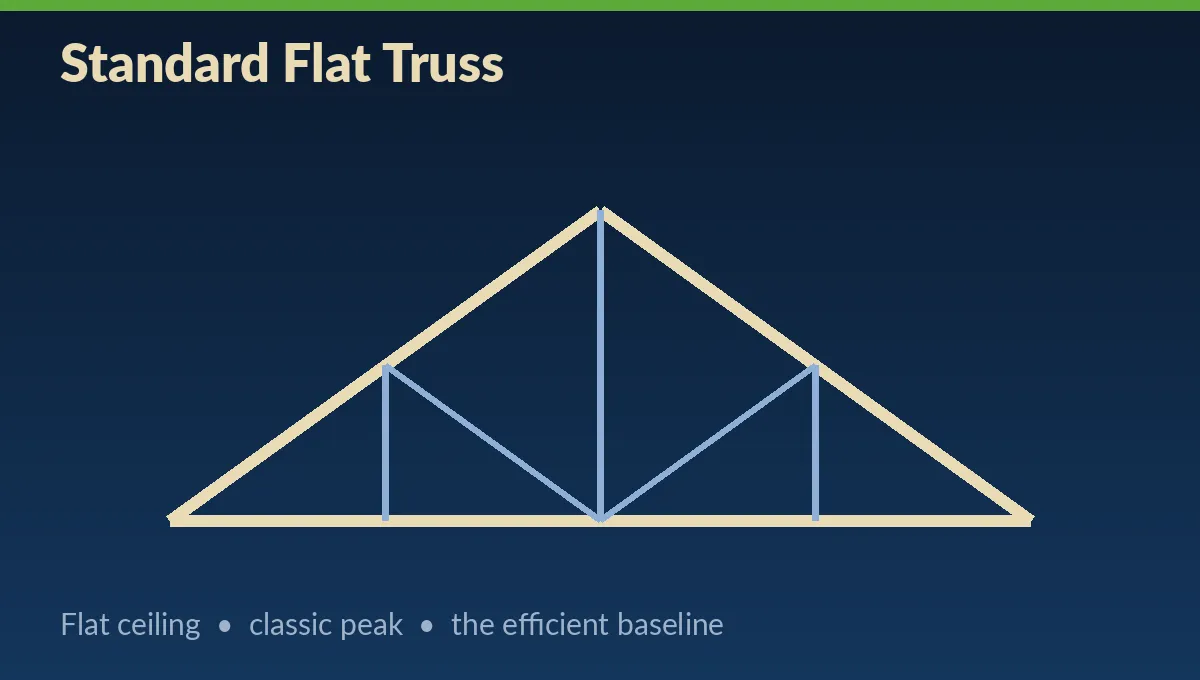
The workhorse of post-frame buildings. A flat (horizontal) bottom chord gives you the classic peaked roofline outside and a clean, flat ceiling inside. Each truss is engineered and factory-built, so the load is carried the same way every time.
Pros: Most affordable and quickest to build, engineered for even, predictable strength, and gives you a clean flat ceiling that's plenty tough for shops, garages and storage.
Cons: The webbing fills the space overhead, so there's no usable attic or loft — and the flat ceiling can feel lower and more 'barn-like' than a vault.
Best for: Equipment storage, workshops and garages where you just need a solid, no-frills roof and won't be using the space above.
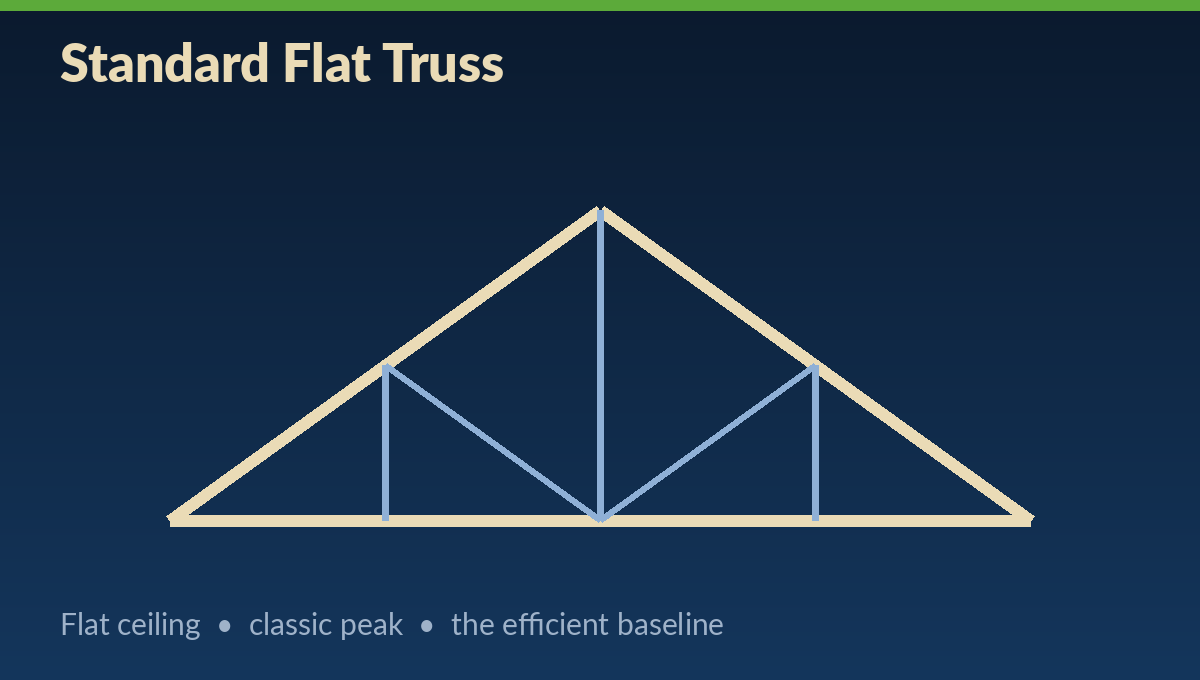
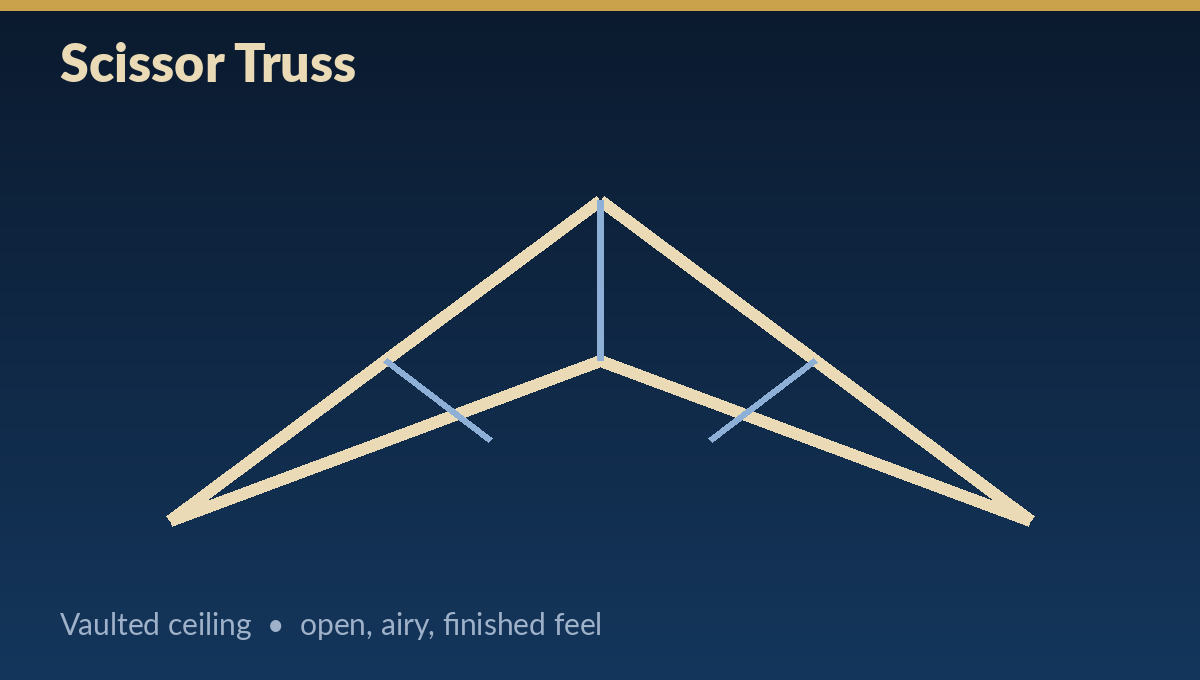
Scissor Truss
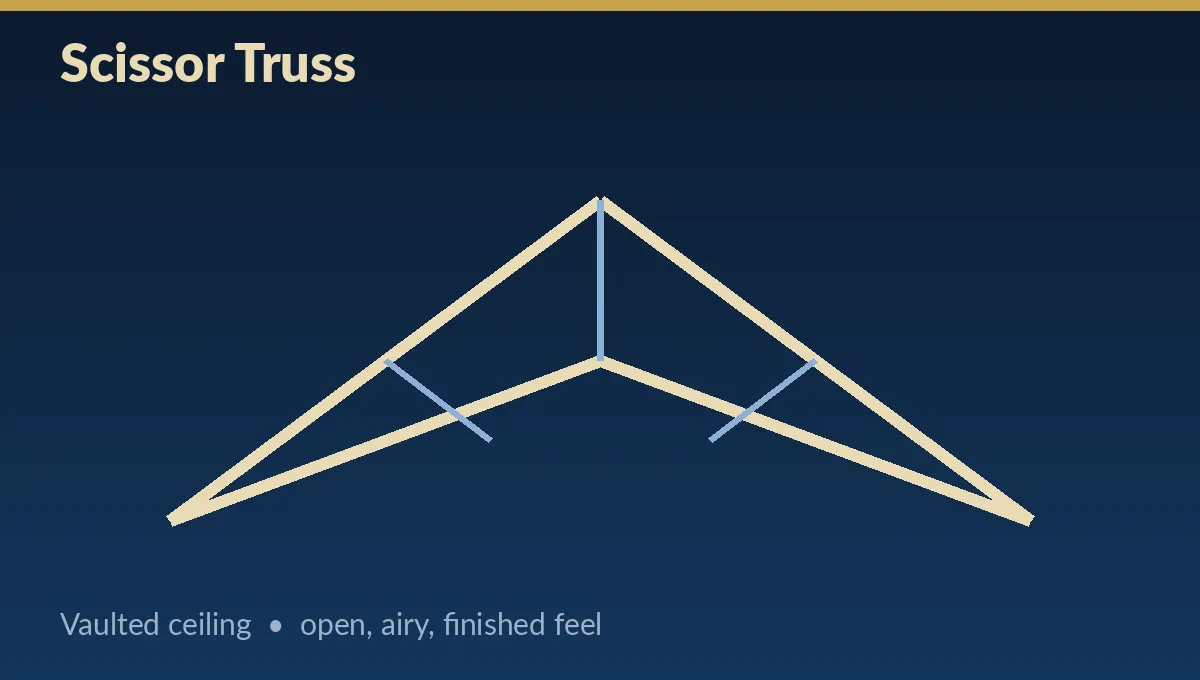
Instead of running flat, the bottom chord slopes upward, opening the room into a cathedral-style vaulted ceiling. The whole building instantly feels bigger, brighter and more finished.
Pros: Dramatic vaulted ceiling and a far more open, premium feel; makes a plain box read like a finished space; strong resale appeal.
Cons: Costs more than a flat truss (heavier chords and engineering), and you give up the flat overhead area you'd use for attic storage.
Best for: Anyone who wants the space to feel like more than a barn — living quarters, finished shops, hobby and event spaces.
Attic Truss
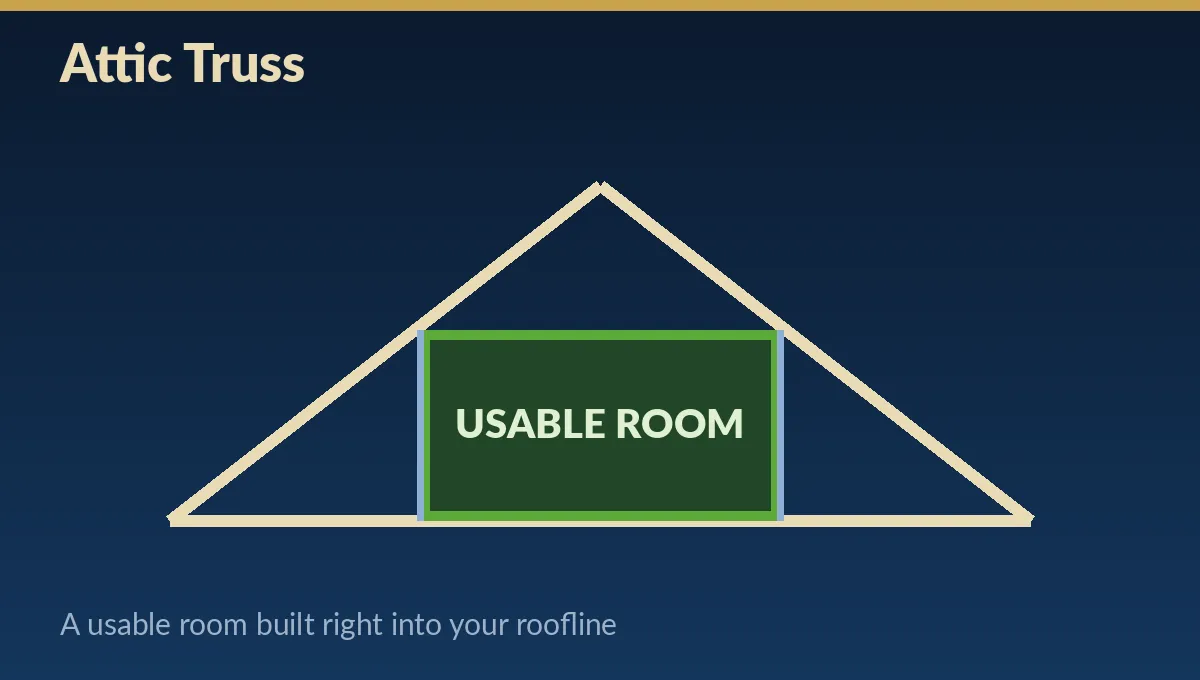
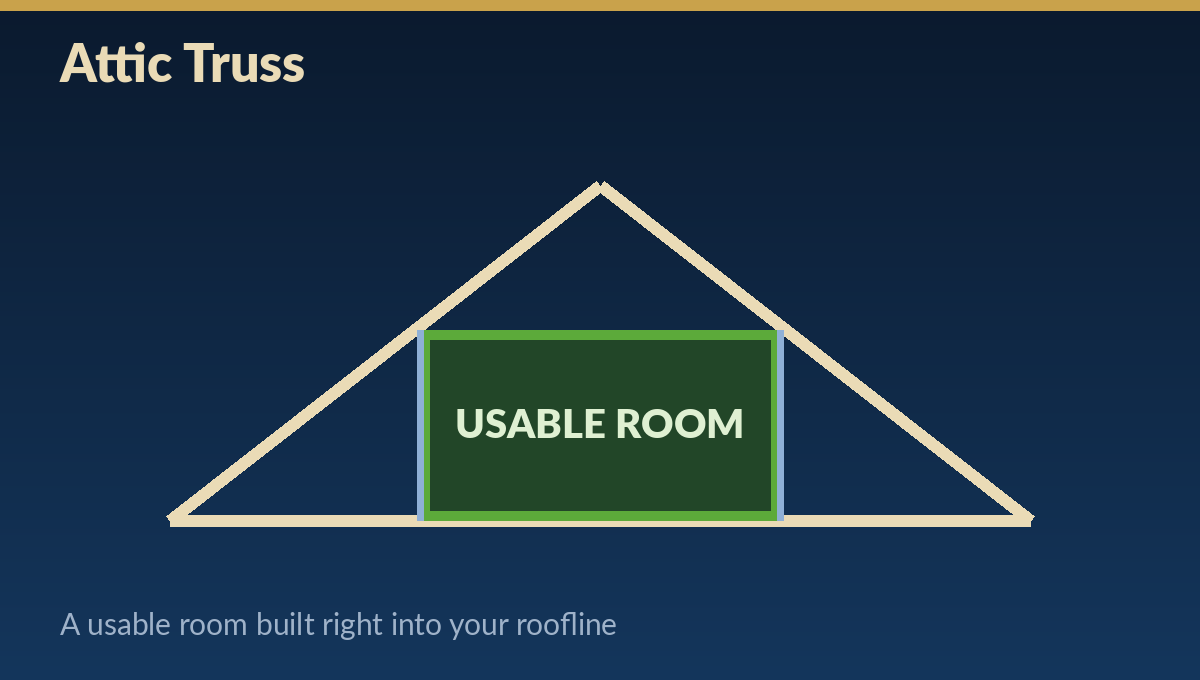
Engineered with a reinforced bottom chord that doubles as a floor system, the attic truss builds a real, usable room right into your roofline — essentially a second story with no added footprint.
Pros: The most usable square footage of any option — a finished or storage loft on the same slab; engineered floor for real live loads; far cheaper to build in now than to add later.
Cons: Higher upfront cost than a flat or scissor truss, and you'll want to plan stair or ladder access and the added roof height from the start.
Best for: Owners who want storage, an office, a bunk room or a shop loft overhead — the upgrade most folks wish they'd chosen.
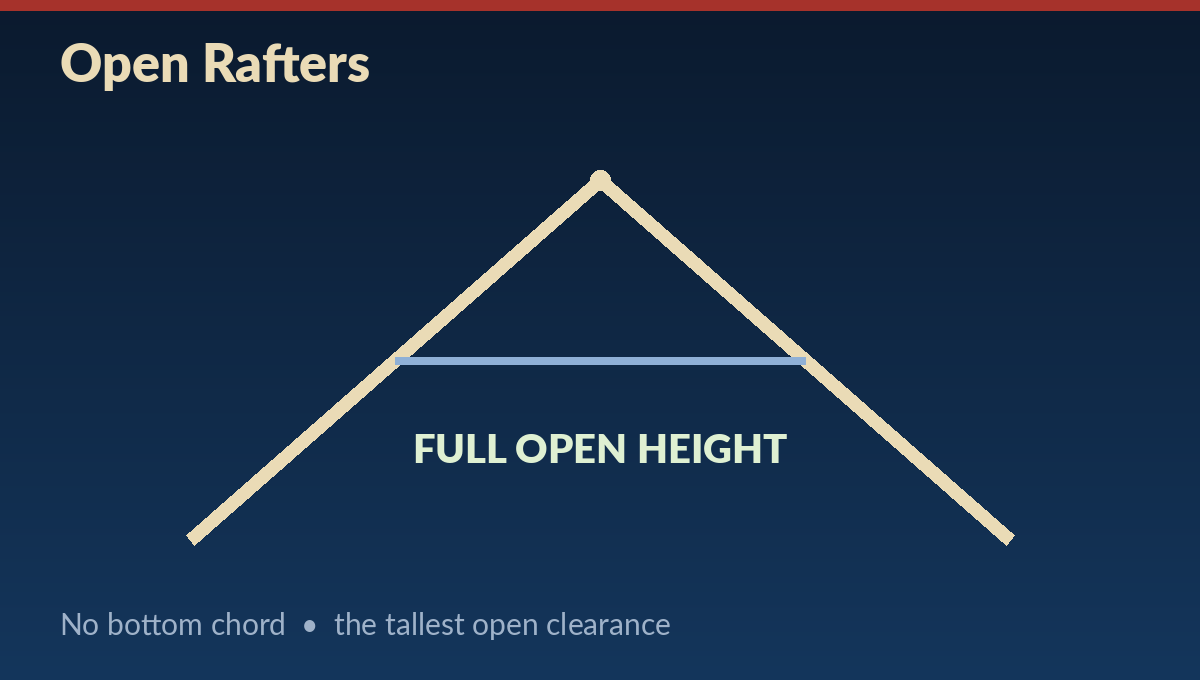
Open Rafters
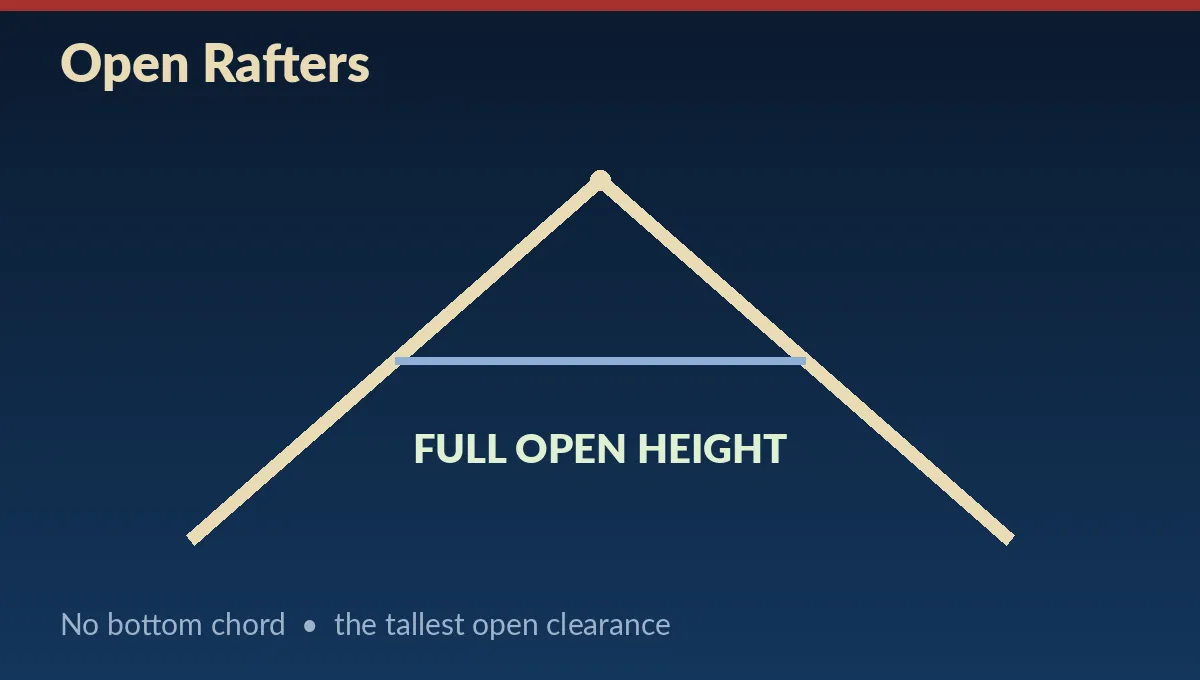
Pros: Maximum open height with nothing overhead; a dramatic, fully open peak; custom craftsmanship for a true statement space.
Cons: The most labor and cost of the four; site-built so it's slower; without careful engineering it can deflect more than a factory truss, and there's no flat ceiling.
Cons: The most labor and cost of the four; site-built so it's slower; without careful engineering it can deflect more than a factory truss, and there's no flat ceiling.
Best for: Equipment storage, workshops and garages where you just need a solid, no-frills roof and won't be using the space above.
Local Quality You Can Trust!
Amish-built pole barn trusses made right here in Ohio showcase generations of Midwest craftsmanship. Meticulously cut and assembled by skilled hands, these trusses are designed for long-lasting performance—built to withstand heavy snow loads, high winds, and years of use with minimal maintenance. Practical, functional, and crafted with attention to detail, Ohio-made Amish trusses are an excellent choice for agricultural, equestrian, and storage buildings and can be customized in size and spacing to meet the specific needs of your project.
What Our Customers Say...

Affordable
Upfront Pricing

Fast
Build Times

Quality
Amish Craftsmanship
Follow Us On Social!
See If We Serve Your Area
Proudly Serving Ohio, Indiana, Kentucky, and West Virginia!
See If We Serve Your Area
Proudly Serving Ohio, Indiana, Kentucky, and West Virginia!


10614 STATE ROUTE 138 SW GREENFIELD, OH 45123
937-500-5158
© 2025 Brand Mule.
All Rights Reserved.
Web Design and Digital Marketing by Brand Mule.